Why private video hosting matters
The most powerful force in business isn’t hidden in a line of code or buried in a workflow—it’s human connection. Yet with teams now distributed across locations, connecting through secure, high-quality video is more important than ever.
Video helps employees, customers, and partners collaborate in ways text and chat never could. Research shows that video can support every team—improving communication, engagement, and knowledge retention. But when it comes to sharing sensitive video content, not all video host sites are equal.
A private video hosting platform gives you the ability to upload videos, control who can see them, and maintain compliance with privacy and security standards. For organizations that rely on video for communication, onboarding, or marketing, this control is essential.
Understanding secure video hosting
A public video platform like YouTube or free video hosts such as Vidyard or SproutVideo are designed for discovery and open sharing. They work well for creators seeking reach—but not for businesses managing confidential or brand-controlled assets.
Private video hosting services, like Vimeo Enterprise, combine enterprise-grade infrastructure with security features that ensure only approved users can access your content. Whether you’re broadcasting to customers, employees, or partners, privacy isn’t optional—it’s foundational.
How Vimeo’s private video system works
Every video stream—whether live or on demand—travels through several stages: capture, encode, package, distribute, and play.
- Capture: Video is recorded via camera or webcam.
- Encode: The file is compressed and prepared for delivery using protocols like RTMP or H.264.
- Package: The video is converted into adaptive streaming formats, ensuring playback across devices.
- Distribute: Files are delivered securely through a content delivery network (CDN).
- Enjoy: Viewers stream high-quality video instantly, without buffering.
This pipeline ensures reliable streaming while maintaining privacy and data protection at every step—whether you’re hosting internal HR trainings, executive town halls, or private marketing campaigns.
Authentication and access controls
One of the key benefits of using a professional video host service is the ability to authenticate viewers. Vimeo Enterprise supports single sign-on (SSO), which ensures that only authorized employees or partners can view or share video content.
SSO eliminates the need for multiple accounts and reduces risk from password reuse or third-party access. Vimeo also supports SCIM and SAML integration, syncing user groups from identity providers like Okta, Google, or OneLogin for secure permissioning at scale.
This means administrators can manage who uploads, edits, or views content—all from a centralized dashboard.
Flexible permissioning and collaboration
Creating great video takes a team. Vimeo provides private, secure, collaborative workspaces that let administrators assign roles like Admin, Contributor, or Viewer.
Each user has access only to their assigned folders or “Private to Me” spaces. Larger organizations can maintain separate access levels for marketing, HR, and IT while storing all video content in a single platform.
These granular controls give you the flexibility to upload private videos, test campaigns internally, and share securely without exposing content publicly.
Security and compliance standards
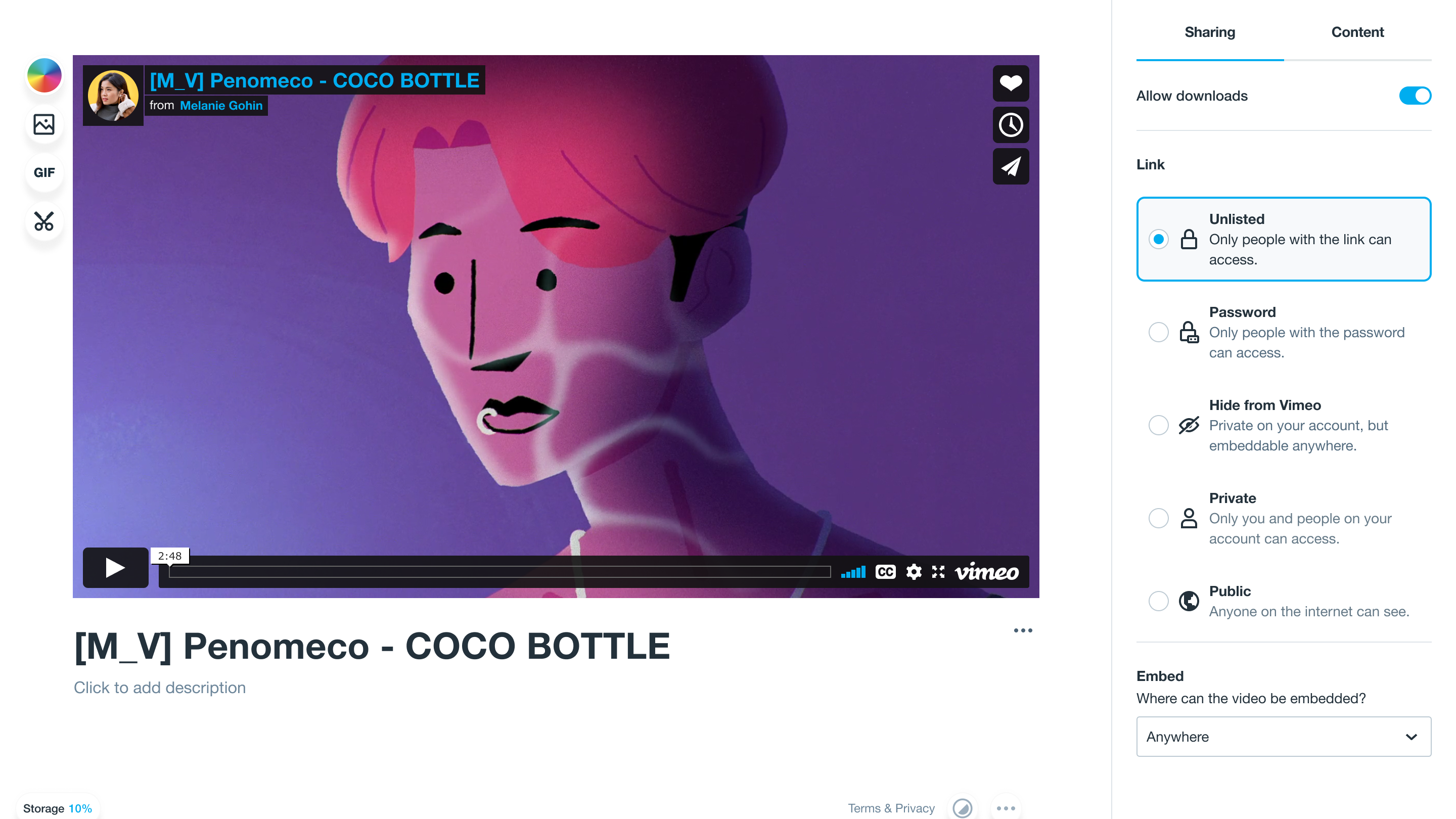
Privacy protection is built into every layer of the Vimeo platform. Businesses can secure content behind SSO, password-protect videos, or restrict embeds to approved domains.
Additional features include:
- Private links: Share unlisted content securely.
- Password protection: Require credentials to view.
- Domain whitelisting: Control where videos can be embedded.
Vimeo is also fully compliant with GDPR, PCI, SOC 2 Type 2, and other international standards. Data is encrypted both in transit (TLS 1.2+) and at rest (AES-256). For regulated industries, this means sensitive company videos stay private—meeting the same standards as top cloud security frameworks.
Reliability and performance
Vimeo’s infrastructure supports more than 200 million users worldwide, ensuring 99.9 % uptime and consistent playback quality.
To maintain stability, the platform performs constant automated checks of site functionality, backed by 24/7 on-call engineering support. Vimeo’s Stream Health Monitoring also tracks bitrate, frame rate, and network performance in real time to prevent broadcast interruptions.
For global teams, the enterprise content delivery network (eCDN) optimizes video delivery behind corporate firewalls—reducing bandwidth costs and latency without requiring additional software.
Monitoring and redundancy
With Stream Preview and Backup Stream, teams can test and secure broadcasts before going live. Vimeo automatically switches to a backup feed if the primary stream drops, ensuring viewers never experience downtime.
These tools are particularly valuable for enterprise users running high-stakes events or internal meetings where failure isn’t an option.
Support and production services
For organizations without a dedicated video team, Vimeo offers professional production services—including consulting, encoding, switching, and on-site support.
Whether you’re producing a global product announcement or training new employees, Vimeo’s production experts can manage the technical setup so your team can focus on content creation.
Private video hosting vs free video platforms
While YouTube and other free video hosts are ideal for reach and discovery, Vimeo Enterprise gives teams the privacy, reliability, and analytics needed to scale secure video operations.
Download the full private video hosting guide
To learn more about secure video upload, access control, and compliance-ready hosting, read the full Vimeo Enterprise Technical Toolkit →
FAQs
What is private video hosting?
Private video hosting allows you to upload and share videos securely, ensuring only approved viewers can access your content through password protection, SSO, or private links.
How is Vimeo different from YouTube or free video hosts?
YouTube and similar sites prioritize public sharing, while Vimeo Enterprise focuses on secure, brand-controlled, ad-free experiences.
How does Vimeo keep private videos secure?
All data is encrypted (AES-256, TLS 1.2+), protected by SOC 2 Type 2 compliance, and managed through role-based permissions.