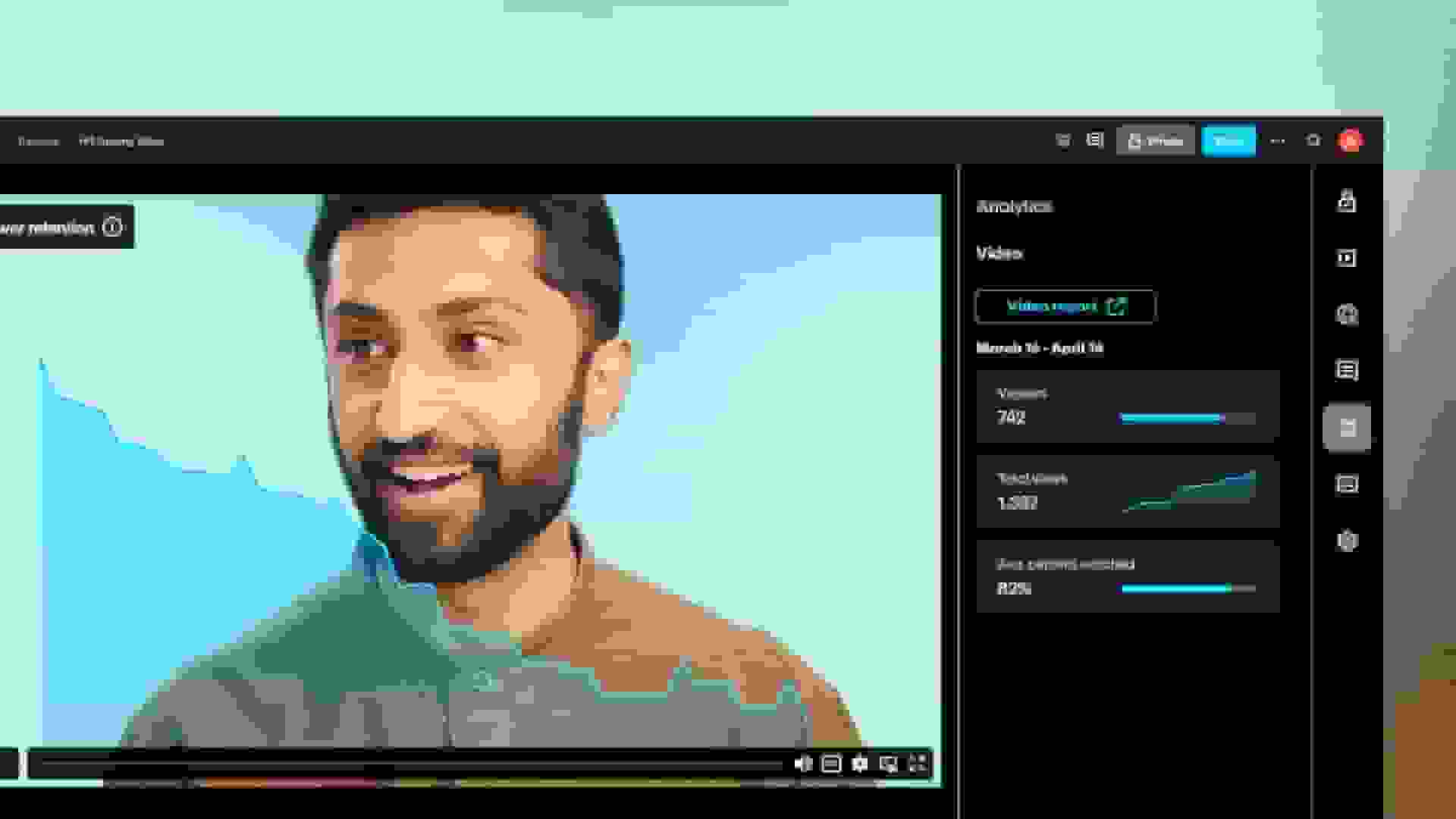
Your video completion rate shows how many viewers watch your video through to the end. It’s an important metric that tells you how well you’re keeping your audience engaged, and optimizing around it can help you increase retention and conversions. This engagement gives you clues about what’s working and where viewers might be losing interest, so you can adjust your plans for future videos.
This guide is an exploration into the video completion rate metric for content creators and strategists. You’ll learn exactly what video completion rate means, how to calculate it with a video completion rate formula, and how it impacts your content strategy’s overall success. Then, we’ll give you some practical tips for improving your video completion rate.
What’s video completion rate?
Video completion rate (VCR) measures the percentage of viewers who watch a video from start to finish. It tracks video completion against total views — not impressions — meaning it counts each time someone clicks the “Play” button and watches your video to the end.
VCR differs from view-through rate (VTR), which measures how many impressions (not clicks) resulted in a viewer watching a video to the end. It’s a subtle difference, but one you should know before attempting to gain insights from your analytics.
Generally, a high VCR means your video is giving viewers something they want. A low VCR could indicate that you’re failing to hook viewers or hold their attention, depending on where they’re dropping off in the video. Ideally, everyone will watch your videos from beginning to end in one sitting (showing they like the content enough to stick around), and VCR helps you track how often that’s happening.
VCR isn’t a good metric for live streaming, where you expect people to hop in and out of the stream. In marketing, video completion rate is a crucial metric for measuring the success of video ads. This guide focuses on video content, not ads, but the basics are applicable to everyone.
How to calculate video completion rate
Calculating your video completion rate is a simple matter of comparing total views with completed views. An analytics dashboard like Vimeo Analytics will do the math for you, but you can also use the following VCR formula to calculate it yourself:
VCR = (completed video views/total video views) x 100%
For example, if your video has 1,000 total video views and 800 completed video views, the VCR would be 80% (800/1,000 x 100%).
Why video completion rate matters and what a good rate looks like
Your VCR can tell you a lot about the performance of individual videos. In aggregate, they can also provide insights into your overall content strategy. Here are a few valuable insights you can learn from monitoring your VCR:
- Whether viewers stay engaged: A low VCR indicates that something about your brand, content, or approach isn’t holding viewers’ attention.
- Which content attracts attention: Topics with consistently higher VCRs offer more opportunities to gain subscribers and overall visibility.
- Whether video length and pacing is captivating: VCR is a great way to measure success when you’re experimenting with different video lengths and structures.
- How other metrics relate: Noticing the relationships between views, impressions, and VCRs can surface valuable clues about what’s working and what isn’t. For instance, a video with a high view count and low VCR might mean your topic is interesting, but the content itself isn’t wowing viewers.
What does a good video completion rate look like?
A “good” completion rate depends on each video’s goal. If you’re looking to answer a single question in a shorter video, then your benchmark for a “good” VCR will be high. Meanwhile, you can comfortably set your VCR goal lower for a long-form video with several chapters aimed at different audiences.
Here’s a table comparing video length with general VCR benchmarks.
Video length | Video Completion Rate | Types of content |
< 1 minute | 70–85% |
|
1–2 minutes | 45–60% |
|
2–5 minutes | 25–40% |
|
5–10 minutes | 15–30% |
|
10+ minutes | 10–20% |
|
Optimize with fast, in-browser video editing →
6 ways to improve video completion rate
Once you know what your average VCRs are, try any of these six methods to optimize your content for higher completion rates.
Start with a clear hook
If viewers are clicking out of a video fairly quickly, you might not be piquing their interest. A good hook engages your audience by giving them a reason to stick around. Typically, a hook promises them one of two things:
- Useful information: Start with a common question and establish your credibility to provide an answer.
- Entertainment value: Show viewers a montage of clips from the video, like a trailer, so they can see what they’re in for.
Match the video to viewer intent
After your hook, clarify precisely who the video is for and why they should watch it. Try sentences that start with “If you’ve ever wondered…” or “When you need a…” to make it perfectly clear who the intended audience is. This approach will filter out people who don’t fit that description or use case, but those who do will stick around longer because they know the video was made with them in mind.
Keep the structure easy to follow
If your audience is falling off near the middle of your video, your presentation might be hard to follow. Organize chapters logically so viewers don’t feel the need to replay sections or skip forward. With a clear structure, it’s easier to provide information at a steady, deliberate pace, which makes your audience more likely to stay focused.
Put important information earlier
For tutorial videos, front-load the most important information, like prerequisites or solutions to common problems. While you might lose some people who click away once they get the info they need, you’ll find that more people watch to the end. That’s because you built a lot of credibility by answering their burning questions right away.
Use analytics to find drop-off points
Take a closer look at your analytics to pinpoint exactly where people are dropping off, down to the second in some cases (like with Vimeo’s analytics). You might find that you’re losing a lot of views from something as simple as a joke that falls flat or a poorly-worded introduction, which you can edit out to try to salvage the video.
Test different versions over time
During editing, create a few different versions of your video to experiment with length, visuals, and the content itself. You might find that certain patterns emerge that you can apply to all your videos. For example, shorter videos might work for all your explainers, while longer videos are better for full tutorials — or vice versa — depending on your topics and audience segments. While best practices are useful, past success is a much better predictor of what will work.
What causes viewers to drop off before the end?
Typically, a low VCR doesn’t come from just one factor but rather a collection of reasons. Here are some of the top causes of a low or declining video completion rate:
- The intro takes too long: Viewers clicked the video to engage with its topic, not necessarily with the presenter. Get into the actual information sooner so they can get what they came for.
- The video doesn’t match the viewer’s expectations: The thumbnail, title, and description should set clear expectations for what the video offers. Otherwise, you’ll frustrate viewers who thought they were getting something else.
- The video is longer than it needs to be: Long-winded scripts and dead space bore viewers, which is more than enough reason for them to look elsewhere for similar content.
- The CTA or key message comes too late: Viewers want to know right away if they’ve found a video that addresses their intent. If you waste too much time before clarifying your message, they’ll find someone else who won’t.
- The wrong audience is watching: Video platforms like Vimeo and YouTube use your video’s metadata, like title, description, and tags, to match your video with what people are searching for. If they aren’t aligned with your content, you could be attracting the wrong audience.
FAQ
Do all platforms define “completed views” the same way?
That depends on what you’re referring to by “completed views.” If you’re talking about ads, then no, completed views are recorded differently on each platform. In digital marketing, VCR is used to determine whether ads are being watched past when they become skippable. For example, YouTube counts ad views as “completed” whenever someone watches one to at least the 30-second mark.
For video content, most platforms count a “completed view” when someone watches the entire video and doesn’t close it until the final frame. However, each platform has a different name for this metric. Vimeo calls it “Finishes.” Meanwhile, YouTube has “Average Percentage Watched,” which serves a similar purpose.
How can captions and on-screen text improve video completion rate?
Captions and subtitles ensure you’re reaching a broad audience. If someone can’t understand your video because it’s in another language, they’re hard of hearing, or they’re keeping the volume low, translations and on-screen text can address those needs to keep viewers engaged.
Track video completion rate with Vimeo
Your video completion rate can offer valuable insights into your content strategy, so it’s one of many metrics to check early and often. It helps you look beyond surface-level view count to get a better sense of your video’s real performance and audience engagement.
Hosting your video on Vimeo means easy access to your video metrics. Whenever you’re curious about your video’s performance, you can check the Vimeo Analytics dashboard to take a look at everything from average watch time to video completion rate. It’s your dedicated dashboard for all your video metrics, so you can make the most of every opportunity to better reach your audience using the actionable data from your dashboard.
Reach your audience more efficiently with Vimeo.