How Cathead Distillery got creative to take care of its community

Camille runs influencer marketing and social partnerships at Vimeo. She enjoys hikes, dogs and spicy margz.
Camille Safadi
Mississippi's oldest legal distillery went from churning out high-quality liquor to producing 30,000 bottles of hand sanitizer for those in need.

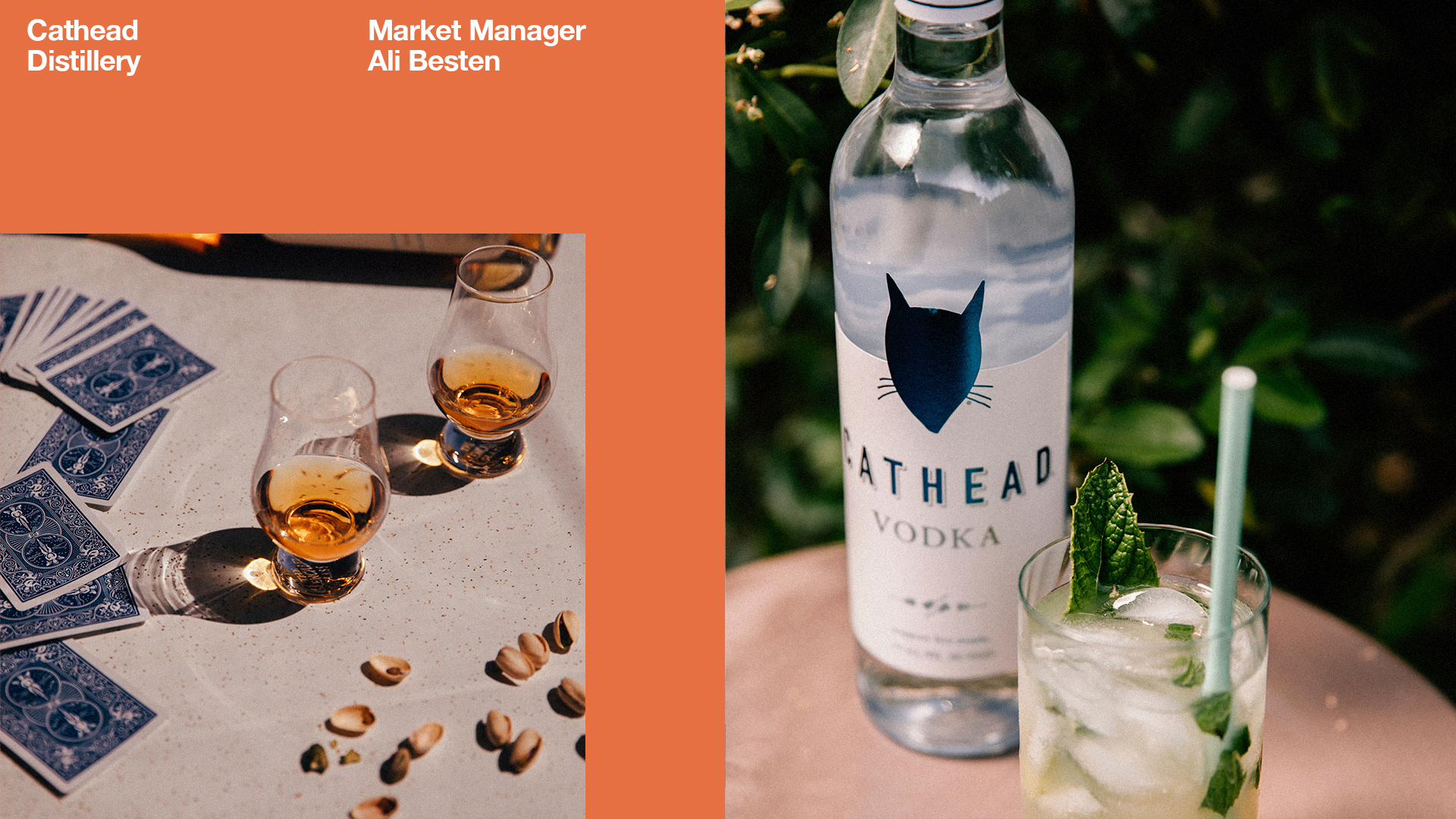
Are you a fan of blues music? What about vodka? (Or bourbon? Gin?) Then you need to know about Cathead Distillery. Founded in 2010 by longtime friends Richard Patrick and Austin Evans, Cathead is Mississippi’s first and oldest legal distillery. But just because the team of 18 has been making small batch liquor for a decade doesn’t mean they’ve stopped reinventing themselves. Cathead has been able to keep their entire team employed throughout 2020 by making an integral pivot to their core product offerings. As shelves began to empty of hand sanitizer and disinfectant earlier this year, Cathead saw an opportunity to meet a need in their community by hustling to provide over 30,000 bottles of free Comfort and Mercy hand sanitizer to people and hospitals in their home state.  We chatted with Ali Besten, Market Manager for Cathead Distillery, to hear how they managed to pull off the large-scale production shift and how they use ecommerce video to spread awareness in their community.

Can you tell us about Cathead?

Today, we produce seven, small batch spirits. The name ”Cathead” was inspired by the Blues culture in Mississippi. The Mississippi Delta is known as the birthplace of Blues music, the only music recognized as truly original to America. To extend our appreciation and love for the Blues community, Cathead donates a portion of our proceeds to support nonprofit organizations that contribute to the region’s abundant arts and culture, including Music Maker Relief Foundation, The Southern Foodways Alliance, and more.

How did you pivot to hand sanitizer?

It was talked about in the company lightly during the first two weeks of the pandemic. We realized that hand sanitizer was a necessity, and it was really needed in Mississippi. We were the main distillery located there that had all the means. At one point, I was getting 40 emails an hour from people asking for hand sanitizer and how to get it. If people around us are suffering and need it, why not pivot? 

How did you scale that production?

Our production team worked nights and weekends. We had to pivot our business model from liquor distribution across states to distributing hand sanitizer to surrounding hospitals. Each day was completely different. It was all about figuring out how to get things into the hands of people who needed it as quickly and safely as possible.

Tell us about the announcement and distribution process.

We connected with municipalities, and it was a partnership with each region of Mississippi. It was connecting with those mayors of those areas and partnering with them. They’d help organize where we were going, and help distribute the hand sanitizer for free. Then there was word of mouth that led to essential businesses reaching out to purchase some. That’s how we started selling it.  Once we were there, we expanded our reach more. Our social media really helped getting the word out. One of our posts around the launch racked up an almost 15% interaction rate, which was big for us. That helped get the word out a lot.

How does your team use Vimeo? 

We love to use Vimeo to create and share content with our foundation partners. A few years back, Music Maker Relief Foundation created some great videos highlighting local Blues musicians throughout the south. We still share and promote this content to this day. Vimeo Create helps us utilize other social platforms to reach new audiences. 

Has your video marketing approach changed since COVID?

We did a little project in quarantine with bartenders throughout the southeast. We picked a few who we have relationships with and we gave them the platform to create a cocktail on video, an at-home happy hour meant to break down each cocktail and show our users how to make it at home. When we posted those on social media, we got some really great feedback. 

How important is video for you in spreading your message?

It’s important for us to take care of our community. If this video encourages others to stay safe and take proper precautions during this time, we’ve succeeded. We are always looking for ways to tell our story and connect with new folks within our community and beyond, and we find that video drives more engagement with our audience than other forms of content. 

Try Vimeo Create

Show us what you #MadeWithVimeo

More from the Vimeo blog

A view of Vimeo Streaming showing icons representing different streaming content that includes Um, Actually

The 11 best video on demand (VOD) platforms

Vimeo vs Panopto

Vimeo vs Panopto: which video platform should you choose?

Edit videos all in one place using Vimeo's editor

Video school: Maximize your video's potential with these powerful tools

Blog post head image alt text

How to share videos to Facebook (from Vimeo, YouTube, and more)

Do you cringe at the sound of your own voice? You’re not alone! Uncover physiological reasons why you don’t like the sound of your voice.

The reasons why you don’t like the sound of your voice

Vimeo Showcase page for an athletic retail brand

Showcases: A beautiful way to show off your videos, everywhere

As consumers continue to shift towards streaming video services, organizations like World on Fire Digital have grown their audience with Vimeo OTT.

Case Study: Word on Fire Digital growing with SVOD

A repressed office drone finds himself face to face with his own very specific fantasies.

Staff Pick Premiere: "Brad Cuts Loose" to fulfill a very specific fantasy