Legal note: I’m a lawyer — just not your lawyer. This piece is provided for general information purposes, not legal advice; it doesn’t create an attorney–client relationship, and it won’t fit every fact pattern or jurisdiction. Laws and best practices change fast, so for decisions that matter, please talk with a qualified professional.
Whether you’re an independent creator or a player at a large enterprise, at this point, you’re probably using AI. Or at least figuring out how you can use it, because AI powers the speed of modern video. Here’s a common use case for many of our Enterprise customers: You record a town hall (maybe using AI to generate a script), edit the video with an AI-generated transcript, auto-caption it, generate chapters, punch up the title and description for video SEO, dub the audio into languages that can be distributed across the globe, and enable a Q&A chatbot so viewers can interact with your video and find exactly what they need, when they need it. Ten minutes later, you’re publishing. Chef’s kiss.
Lawyer here, here’s what I’m thinking about: Every one of those little assists is an AI governance moment. Not the last step. Not just the “AI-ish” parts. All of it. Scripts, captions, thumbnails, descriptions, generated audio, moderation, analytics, all touch people, their rights, and your reputation and security. Just as there are business risks to not using AI, there are tangible risks when deploying AI. To move fast and have your legal team sleep at night, it’s important to embed good policies and practices into your organization (this is governance!).
What AI governance is and why it matters
AI governance takes different forms and definitions across varying organizations and industries. But generally, it refers to an organization’s efforts to identify and mitigate risks when using and developing artificial intelligence systems.
Good governance programs support long-term success and foster trust in the organization, both internally and externally, and of course decrease the organization’s exposure to liability. There are plenty of resources and frameworks (NIST, ISO, OECD, etc.) that governance professionals can reference to build out a robust AI governance program. However, when the topic shifts to AI in video, the usual governance playbooks start to run out of road. Video is unique — it puts faces and voices in focus, mixes audio, visuals, and metadata, and travels intact through embeds and clips. That’s why AI video governance deserves its own playbook: The risks are unique and surface at different moments (capture, edit, publish, distribute) and can compound if you don’t design for them upfront.
As the largest, most trusted private video network in the world, Vimeo sits at the crossroads of video creation, hosting, and distribution for organizations of every size. We see where generic AI guidance breaks down in real production workflows, because we experience it. That vantage point is why this article focuses on AI video risk specifically — naming the issues that actually surface on set and in the edit, and framing what quality governance looks like when the output is something your audience will watch.
Ok, you’re leaning in now? The rest of this article is the practical version: What’s uniquely risky about AI in video specifically, what “good” governance looks like, and how Vimeo supports your organization’s AI governance.
AI video risks from the edit bay to the big screen
1) Inaccuracy, inappropriateness, and hallucinations
AI is great, but the machine revolution isn’t quite upon us yet. Even the most sophisticated AI models still show a propensity to generate inaccurate output, invent facts, and even produce content that can be inappropriate for the context or even harmful.
When AI misfires in a video, it doesn’t quietly sit in a paragraph. For example, a bad auto-chapter jumps viewers past the only safety disclaimer in your video. A generated summary invents a fact that gets embedded with the player across your website, sales decks, and social. A multilingual dub flips an idiom into something…not so family-friendly. When hallucinations are left in public content, it can be embarrassing; It’s a brand statement, and the blast radius can be big since videos are portable and remixable. If left unchecked, this can open the door to legal liability under fair trade, consumer protection, and false advertising laws (like the FTC Act). Perhaps just as concerning is the reputational impact that this risk can have on your organization.
Example of an AI video hallucination of Mt. Rushmore.
What good AI governance looks like
What makes video special is the human connection it uniquely supports. From early ideation to editing and distribution, keeping human oversight and creativity in the loop is the best way to deploy AI-driven video that remains human-centric. It’s fine to let AI help you move faster — it’s not fine to let it publish fake facts or anything safety-critical without human sign-off. A good governance program will establish review gates at key areas and points to ensure the video material is accurate, appropriate, and on-brand.
How Vimeo supports responsible AI use
Vimeo designs all of its AI features to ensure human oversight and approval before anything is accepted and made public. None of Vimeo’s AI features makes automated decisions without human oversight. Vimeo AI features are built to support review and validation prior to external visibility.
For features intended for use by creators or video owners (such as tools that generate summaries, scripts, or suggested questions), outputs are not displayed to external audiences until the creator has had an opportunity to review and approve them.
For viewer-initiated features — such as Ask AI, which enables a viewer to ask questions about a video — responses are generated in real-time and presented directly to the viewer who initiated the query. These responses are derived from the video’s existing content and are displayed only to the individual viewer, allowing them to evaluate the AI-generated output in the context of the source material.
All Vimeo AI features (except for the AI video script generator) are grounded in your video content and your prompt input, and not from external sources (aside from the foundational AI models), which may help maintain the quality of your input content, supporting accurate and appropriate generated output.
2) AI transparency and misinformation
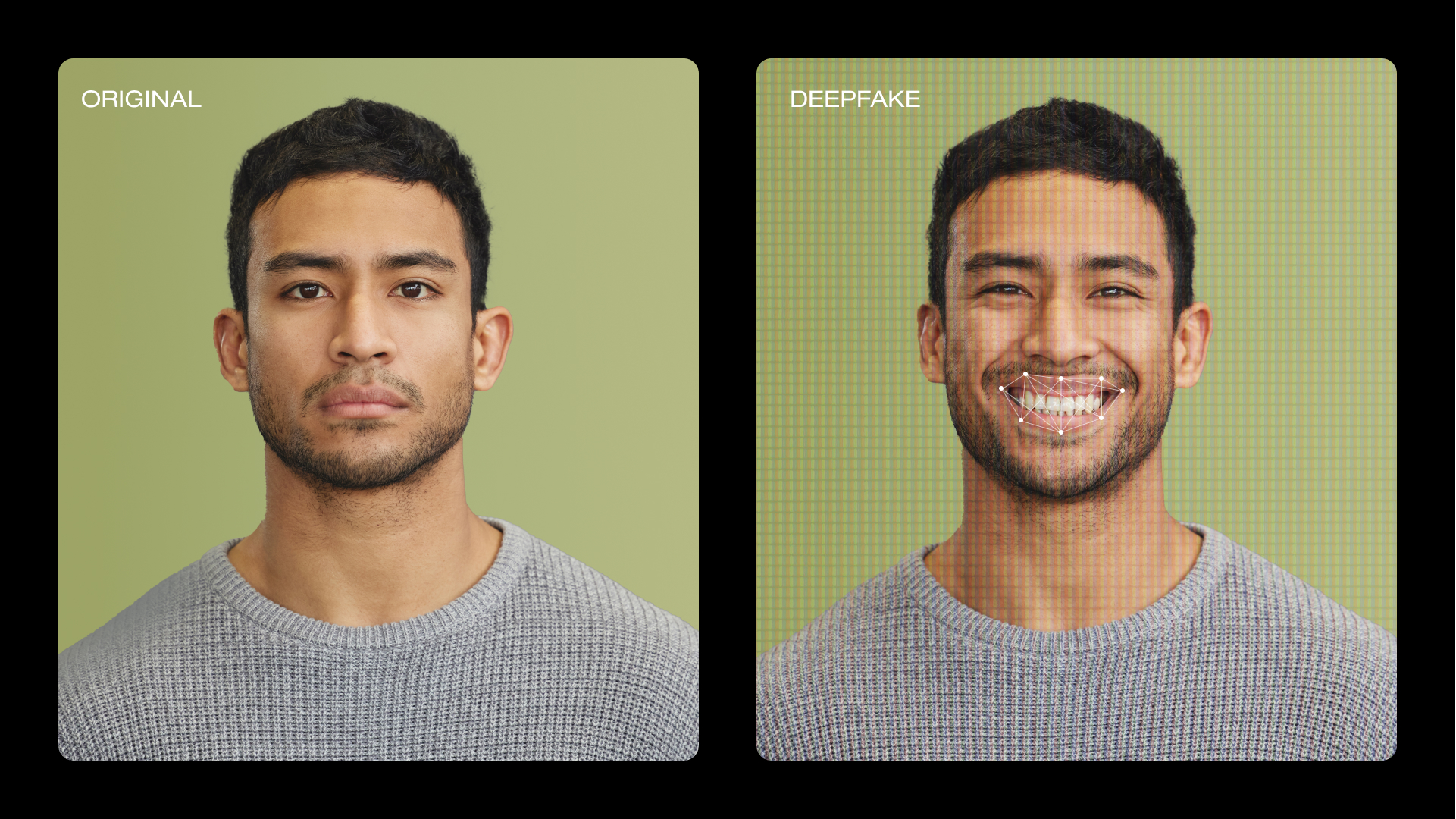
Video often gets clipped out of context. Synthetic video and audio only amplify the risk that a piece of media can mislead and misinform its viewers. For example, a synthetic cameo that’s obviously playful or fake in a montage can become a “real” endorsement when it shows up as a 12-second cut on social. People can share players and embeds without the surrounding context — if you don’t tell viewers what’s synthetic, they’ll assume it’s real, and now you’re doing reputation management at 10 pm. Or even worse, your organization is contributing to the fake news cycle.
Governance frameworks generally call this AI transparency. There is no more important medium for AI transparency than there is for video. Scroll social media long enough and you’ll trip over AI-generated video if you’re not careful. While Sora and Veo have taken steps to support AI watermarks, savvy users have found workarounds. Unfortunately, many AI-generated or AI-modified videos are being passed off as real. But there isn’t always a malevolent intent. Sometimes, AI users aren’t aware of when they need to label AI-generated or AI-modified videos. Or they may not be aware of the AI transparency tools available to them. A strong AI governance framework will define when transparency labels must be applied (i.e., an AI transparency policy), and your compliance team will help get everyone on the same page on how to access and use transparency tools.
Legal frameworks are trying to catch up to the influx of deepfakes and misinformation perpetrated by AI. The EU AI Act places certain disclosure requirements on Deployers of AI systems when their use constitutes the Act’s definition of a deepfake. In the US, the Federal Trade Commission has always enforced rules requiring businesses to refrain from misleading or harming the public. But some states have started to take a more targeted approach. California has enacted a line of AI transparency statutes (i.e., Bots Act, AI Transparency Act, and even the CCPA). Other states are developing their own flavor of AI laws that may carry their own transparency requirements.
What good AI governance looks like
We should be labeling AI-generated segments where the viewer sees them — on the video player and the video page — not just in a file no one opens. Consider using platforms that can preserve provenance signals and keep an edit trail. Be prepared to answer questions: When should synthetic videos be labeled, who pulls them down if they’re already posted, who adds labels, and who posts the correction. Regulators are moving toward risk-based regimes — showing your process can be half the protection.
How Vimeo supports AI transparency and explainability
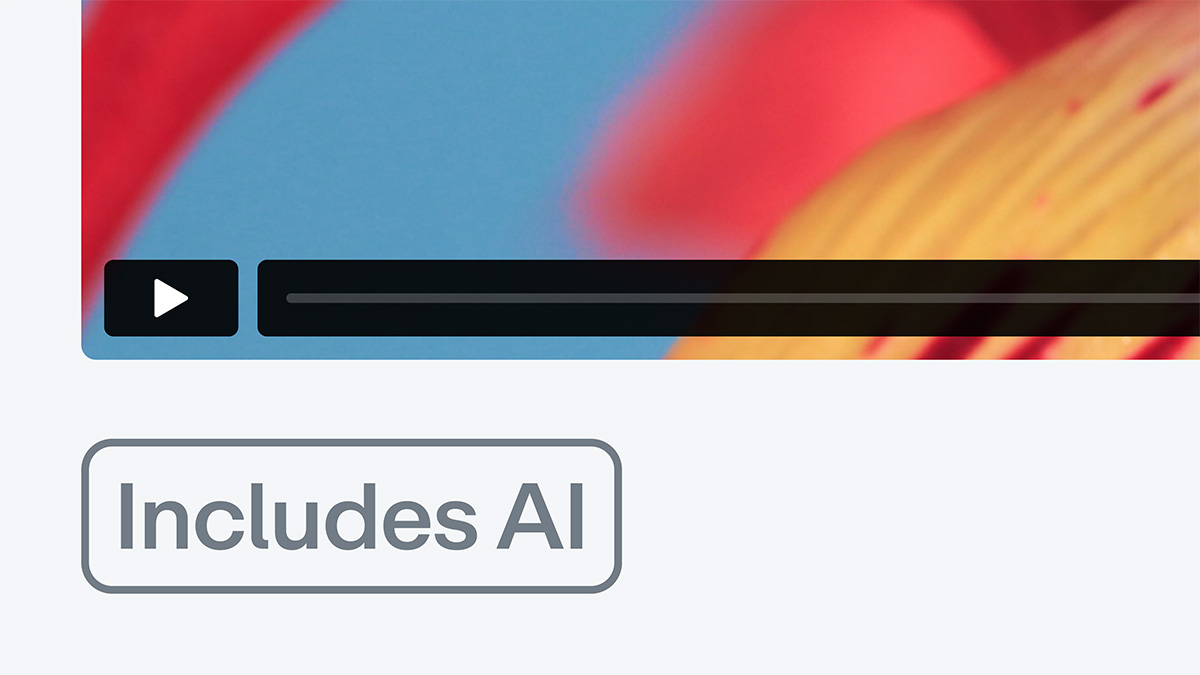
Transparency isn’t just a paragraph in a policy — we put it into action in our video player. That’s the bar we aim at with our “Includes AI” labeling system. Whenever you use one of our Vimeo AI tools, we’ll automatically add this transparency label for your team. This label will appear in the video page and the video player, both on the Vimeo website and on embedded videos.
Of course, you have full control and can enable and disable these labels to fit your organization’s policies. If you generate an AI video off of the Vimeo platform and port it over to Vimeo, you can enable the AI label for those videos too. Also, whenever you use AI translations, we provide an AI disclosure right where the user selects which language they would like to play. To promote a safe and reliable platform, we require all of our users to follow our AI disclosure policy.
With Vimeo’s replace video feature, if you ever find that you need to correct or update a video, you can edit the video in the Vimeo editor (or your favorite editor other than Vimeo) and replace the existing version with a new version while preserving the original video URL, comments, and metadata.
3) AI privacy concerns
Video carries identity better than any other medium. Using AI tools that replicate the voice and likeness of real individuals has individual privacy implications. The most relevant laws in the US protect an individual's right of publicity and protect those individuals from someone creating content that places them in a false light.
These laws allow you to control who can profit off your name, image, voice, and likeness and prevent the public placement of a person in a false light that would be offensive to a reasonable person. If you clone a real person’s voice for a commercial, you’re wandering into right-of-publicity territory. If what you’re doing could ruin their reputation, you may be placing someone in a false light and may be subject to even more liability.
Most of these types of AI tools require the collection, processing, and storage of biometric data. This complicates things — just ask your Privacy counsel. Some of the most stringent privacy laws concern biometric data and place real liability on the misuse of an individual’s biometric data, especially without providing proper notice and receiving proper consent.
Just as challenging (if not impossible) is putting the genie back in the bottle once it’s out. Meaning it’s not clear if an individual’s right to be forgotten can realistically be honored once an AI model is adjusted, trained, fine-tuned, or otherwise improved on their personal data. Many of these advanced deep-learning and diffusion models are called “black boxes” because they lack explainability into how they work and how models have adjusted to individual training data. Because of this, merely removing the individual’s data from the training data set may not affect its impact on the model, and there could be a potential for recreation. The only option would be to retire the AI system or revert to an older version, which is generally not a viable option from an economic perspective.
What good AI governance looks like
Synthetic voices are essentially rights-managed assets. Just as you may maintain licenses for your music and stock images, you may need licenses, consents, waivers, etc. for the individual whose voice you’re cloning. Optimally, you have this documentation before you clone their voice, because once you provide the voice to the cloning AI, it may have already created a voice print, and you may have already overstepped your rights.
Anyone at your organization who is using cloning technology should be aware of the organization’s requirements and understand when they need to get written consent and when cloning is restricted. Don’t just keep these documents locked away in a legal team folder once they’re signed. All of your creators and editors should be aware of the rights that are being granted (what they’re allowed to do and not allowed to do) and when those rights expire. Privacy teams should understand what the data retention timelines are and ensure that they comply with applicable laws and the agreement with the cloned individual.
Transparency is a core tenet of responsible AI use, and AI content labeling is an important part of that. It doesn’t get any more vital than when you are using AI to clone the likeness of another person. This means that it should be easy for viewers to see and understand that the material they are viewing is AI-generated or modified. Also, make sure your AI vendor and their third-party providers aren’t retraining their voice models on your input voice data or otherwise adjusting weights and inferences based on this data.
How Vimeo supports AI privacy
Vimeo provides a secure and reliable solution for AI video dubbing. If you’re an Enterprise customer, you can clone the voices of the speakers in your videos and translate the audio to at least 29 different languages and subtitles. Before the cloning process commences, Vimeo reminds your team that there may be legal implications in translating the video and that it may require written consent from the voice subjects.
If your team isn’t able to get the needed documentation or if they are a resident of regions with strict biometric laws (e.g., Illinois), no sweat, we also offer stock voices that do not require the collection or processing of any biometric data. The stock voices are great as they can more accurately replicate the accents of the regions you’re targeting. Then, to reinforce human oversight and accuracy requirements, you can edit the translated transcripts, which then updates the output audio within the video. This ensures that you’re able to provide an accurate and appropriate translation.
Any time you use our AI dubbing tool, we’ll add an AI disclosure to help identify when the voice or audio may be AI-modified. Of course, you can always add this label yourself in your video settings page. Finally, Vimeo does not train any AI models on the voice input, output, or content you provide when using our AI tools (neither will our AI providers).
4) AI fairness and bias
Algorithms are the Frankenstein's monster of villains — they don’t necessarily want to do harm, it just kind of happens because of their nature. AI bias can occur when an AI system routinely treats some people worse than others. While bias is a major issue, many AI governance practitioners have started redefining the scope of this issue more holistically under the theme of AI fairness because “bias” is a broad idea and can mean different things in different contexts.
Realistically, we may never be able to fully eliminate bias from algorithms (and we may not want to). AI fairness looks at the broader picture of the AI system, its audience, and the context you put it in. In video, that context really matters. Think about captions that nail one accent but consistently butcher another, auto-cropping or face recognition that tracks pale faces but loses people with diverse complexions, translations that perpetuate gender stereotypes, or recommendation engines that quietly push smaller creators to the back row. Tiny choices that may appear facially neutral may compound over time. This can result in skewed data, inconsistent labeling, models tuned to majority patterns, data that is not robust enough to handle diverse user groups or use cases, old data that should have been retired long ago, and drifting of the model over time. The people affected are broader than just “users”: creators on camera, bystanders in frame, moderators, viewers, partners. And these harms are sometimes only visible when viewed at the intersectionality of identities (e.g., older speakers with non-regional accents).
Why care? Beyond it being a “bad look”, bias erodes accessibility and trust, can throttle content diversity (and thus growth), and may open the door to legal liability in some domains. The regulatory environment is currently all over the place. Some federal and state regulating bodies are leveraging existing anti-discrimination laws or baking in anti-discrimination requirements in new laws (i.e., Colorado AI Act, New York Local Law 144) to extend control of AI bias in particularly risky environments, like employment, education, and health. Recently, the US government has signaled an intent to take a step back from AI bias regulation (or at least a certain flavor of AI bias) with its anti-woke AI initiative. But this doesn’t necessarily change the expectations of your customers and workforce. The demand for video accessibility (e.g., captions, translations, etc.) and unbiased AI systems still persists, and the expectations may be stronger than ever.
What good AI governance looks like
A good starting point is defining what AI fairness looks like at your organization, per feature and use case (auto-captions, translations/dubs, generative video or images, etc.). This requires identifying the stakeholders, so your team can easily recognize who could be affected, what could go wrong, and the minimum bar you’ll enforce.
One challenge is figuring out how to measure fairness. Since AI fairness is both a social and technological challenge, an intuitive approach is to use both technology and human judgment to identify when your processes and technology don’t meet your organization’s expectations of AI fairness. Then make review and enforcement a habit. For each campaign, spot-check real clips across your key audiences and locales, looking for simple tells — names and numbers right, idioms handled, lighting/skin tones treated consistently, unfair stereotypes mitigated.
Bring in diverse perspectives to contribute to reviewing your video copy. If patterns are identified, determine how they can be mitigated for the feature, add one line to your team’s style notes so everyone fixes it the same way next time, and keep going. Build recourse into the workflow so people can correct misses quickly (caption edit, moderation appeal, “send for review” on risky topics), use AI labeling as required by your company’s policy so viewers aren’t misled.
How Vimeo helps your organization tackle AI bias
At Vimeo, we aim to foster a culture of fairness. This extends to our development of AI features.
We only work with industry-leading AI partners who have taken an affirmative position to invest in promoting AI fairness and reducing algorithmic bias. Of course, there are a lot of moving pieces and factors that can still lead to biased output appearing in any AI technology. However, Vimeo provides top-of-the-line solutions that fit into your organization’s video use and creation workflows to promote AI fairness.
Perhaps most significantly is our Review and collaboration solution. Built directly into the Vimeo platform, our Review tools let you bring diverse perspectives — including external stakeholders — into the edit safely using custom review links you control (passwords, expirations, and per-viewer permissions), so you can invite outside counsel, community advocates, or regional reviewers without opening the floodgates. As feedback comes in, time-stamped comments keep notes actionable, while status labels and version history create a clean, audit-ready trail of what changed, who approved, and which cut is current — exactly the kind of documentation most governance programs expect. It also meets people where they already work by syncing feedback with Adobe Premiere Pro, so fixes actually get applied instead of dying in a spreadsheet.
5) Security
Security problems in AI aren’t just hackers vs. firewalls. They’re what happens when your content, prompts, and people become raw material for systems that learn. The same features that can make AI better — large context windows, model updates, fine-tuning, logs, and integrations — also create new paths for data leakage and re-identification.
If an AI vendor keeps your audio, transcripts, or prompts to “improve” a model, those artifacts could potentially be rediscovered later (inference and inversion attacks are common) or simply repurposed inside someone else’s product. This is why serious providers now say, in plain terms, they don’t use customer inputs or outputs to train foundational models, and restrict third-party retention to short operational windows.
AI features are data hungry — they can send far more than they need to third parties, keep it longer than anyone meant, and scatter copies across logs and caches. Every additional tool can increase harm if something goes wrong. Good AI developers counter this with data minimization and privacy-by-design architecture: scoped inputs, short retention, strong encryption in transit and at rest, and logical separation so one customer’s data never commingles with another’s.
The details matter: who receives what, for which function, for how long, and under what guarantees; who can turn a feature off; and who must review AI outputs before anything faces the public.
What good governance looks like
Build AI security into the same steps your team already uses to make and release content. Keep the stack small, so fewer tools ever touch your organization's files. When you do use an AI feature, share only the data it needs, for a defined purpose, and for a limited period of time. Give admins real on/off switches so features that don’t fit your policy or a specific market can be turned off quickly. Lock identity and access with SSO, role-based permissions, and least-privilege so only the right people and services can touch sensitive assets. Keep customer environments isolated, encrypt data in transit and at rest, and watch the egress paths to third-party models.
Vimeo’s approach to secure AI governance
Vimeo may help reduce exposure by consolidating creation, editing, hosting, and distribution on one platform, so fewer vendors ever see your data. Vimeo Workspaces lets enterprises partition by business unit, brand, or region while keeping central policy control, which means different teams can have different AI settings without loosening the overall guard. Admin feature switches let you turn creator features on only where you want them and keep viewer features like Ask AI off entirely if policy requires it. Video access is governed with granular roles and private sharing controls such as passworded or expiring review links, domain-level restrictions, and download limitations, so drafts and sensitive assets reach only the people you intend.
Under the hood, Vimeo AI runs on leading AI model providers and is built on the same SOC 2 and ISO–aligned controls as the Vimeo platform, and all customer content is logically separated across customers. Vimeo does not use customer content or outputs to train any generative AI models, and third-party AI providers used for Vimeo AI are contractually restricted from training on your data.
Power your video strategy with responsible AI
Governance is the practice of connecting cross-functional decision makers to set policies and procedures that guide an organization through complex challenges. AI video governance is a handful of habits that only take root once the organization understands the risks and consequences of enabling AI video.
For all the considerations, controls, policies, and procedures discussed here, nothing prepares an organization for responsible AI more than education and clear communication. These risks, mitigation techniques, and best practices need to circulate across teams. From our perspective, there’s no better medium for that than video. Vimeo powers interactive video that distributed workforces use for internal communications and learning development.
If there’s a through-line, it’s this: Speed is only a superpower when people can trust what you ship. AI gives video teams real acceleration, and it also raises real questions about accuracy, transparency, privacy, fairness, and security. Governance is how those questions get answered in advance with visible habits (documented well) so you can create the kind of video that keeps people, your viewers, in the front row.