A list of short film equipment will include most of the same filmmaking gear as a feature-length film. The length of the film doesn’t have much of an impact on how much videography equipment you need, like cameras, lenses, and tripods. Filmmaking at any scale requires plenty of gear, so you’ll need to find, purchase, or rent equipment to tell your story.
This article provides a checklist of movie production equipment for short films. It’ll also point out the few areas where a short film lets you get away with a smaller investment so you can stay within your budget, and how to continue production with Vimeo after shooting’s over.
Short film production equipment list
There are a few major pieces of equipment everyone will need to shoot a short film.
Short film equipment list | |
Camera gear essentials |
|
| |
| |
Audio equipment |
|
| |
| |
| |
Camera movement and support |
|
| |
Lighting and grip |
|
| |
| |

Edit your footage in-browser with Vimeo →
Camera gear essentials
If you can make one purchase for your film, prioritize a camera. It’s not likely you’ll be able to make an original film without a shoot, and the quality of your camera influences the visual quality of the whole project.
Here are our recommendations for the camera equipment you’ll need to record high-quality video.
Cameras
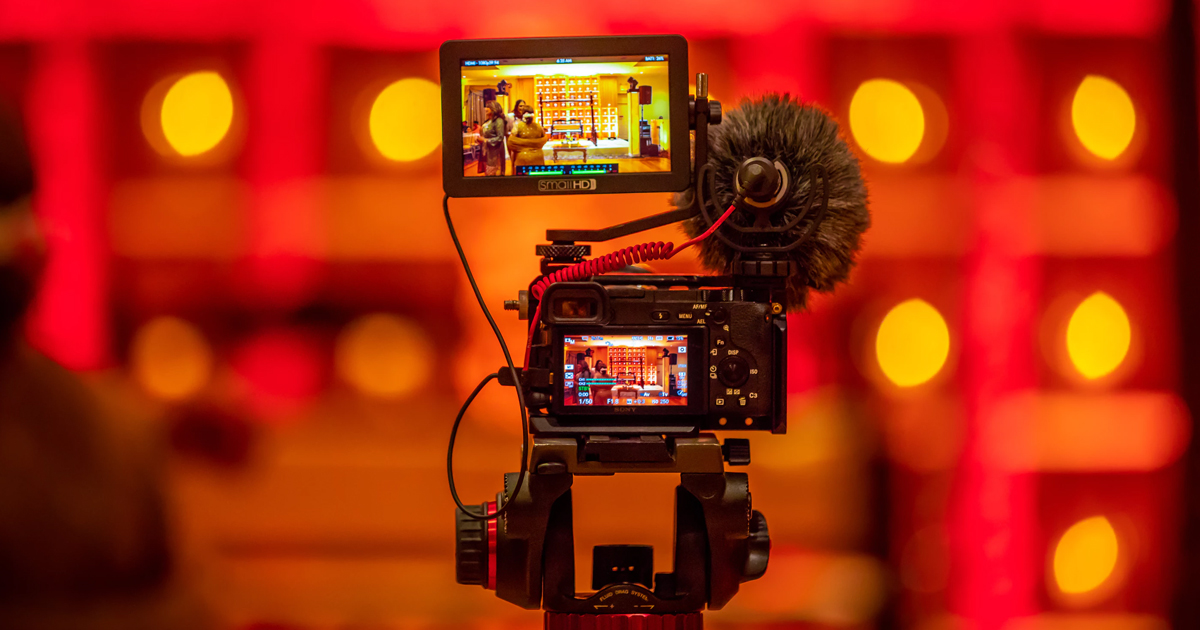
A decent filmmaking camera can be expensive, but if you have the budget for one, it’s a worthwhile investment. There are some affordable options for great digital cameras that will work for low-budget short films, such as the Panasonic Lumix GH4, a mirrorless camera that’s versatile and less expensive than many comparable DSLR cameras.
If you’re on a tight budget and someone on your crew has an iPhone, then you’re in luck. The iPhone 15 and iPhone 16 are great traditional camera alternatives for filmmaking because they can shoot at 120 frames per second (fps). High framerates like that create smooth movement and can pick up fine details from fast motion.
Lenses
You’ll need more than one lens to get your camera shots just right. For example, wide shots require wide-angle lenses, which have a focal length below 35mm. That and a 50mm prime lens — the most common focal length — will likely be enough to get started on a short film.
Storage
Recording in 4K and at high frame rates will create massive files, and most professional video cameras lack internal storage. You’ll need an external storage solution rated for high-speed recording (typically at least 60 MB/s). SD cards like the SanDisk Extreme Pro are an affordable option that can write at up to 150 MB/s.
Audio production
High-resolution video is essential for quality filmmaking, but audio often distinguishes an OK film from a great one. Here are the recording devices you’ll need to capture top-notch audio.
Microphones
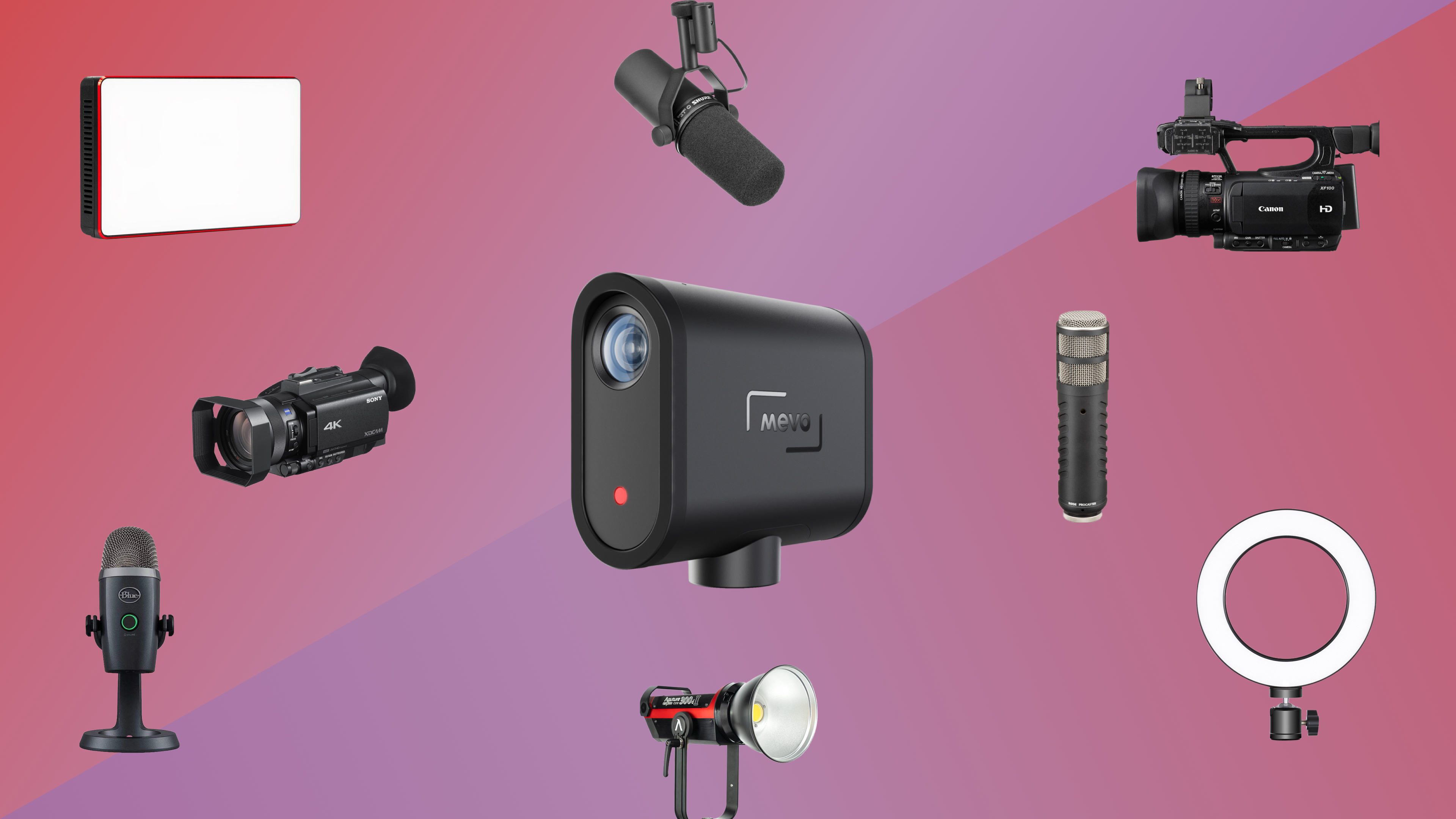
Recording quality audio requires the right combination of microphones to capture dialogue and other sounds:
- Lavalier (lav) mics are small microphones you pin on a speaker’s lapel to capture their voice. They’re simple to use but hard to hide.
- Shotgun microphones capture directional audio from just out of frame. They require skill and practice to use, and generally need accessories to function well. There are on-camera versions that mount directly to your camera, so the accessories aren’t mandatory, but on-camera mics require a steady hand and careful positioning to stay out of the frame.
- Condenser mics capture audio at a wide angle, making them great for picking up ambient noise and background chatter. You can skip these microphones if your short film’s soundscape consists mostly of interviews and dialogue.
Audio recorder
All audio needs to pass through a recorder that encodes and saves the files for later editing. Some audio recorders, like the Zoom H5, have built-in microphones to make recording simpler (but you’ll still need an external mic or two).
Like your camera, you’ll also need SD cards to store the audio files, though they don’t need the same write speeds. 10 MB/s is more than enough for storing high-quality, multi-channel audio.
Boom pole and accessories
Unless you’re relying exclusively on lav or on-camera mics, you’ll need several accessories to ensure your microphones pick up crisp audio:
- Boom poles extend your reach, allowing you to hold a shotgun microphone above actors just out of frame while standing behind the camera.
- Windscreens are fluffy covers you place over microphones to keep the wind from blowing into them. These are important for outdoor shoots, but less so for indoor filming.
- Clamps firmly attach your microphone to tripods, gimbals, and other surfaces, keeping it perfectly still while recording.
- Shock mounts stabilize your microphone so it doesn’t pick up vibrations and jostling sounds from movement.
Headphones
Headphones are essential for monitoring audio as it’s recorded and editing it in post-production. Use wired headphones so you’re never stuck waiting for them to charge. The Sony MDR-7506 is the classic choice since it’s affordable, durable, and accurate. If you prefer something else, make sure it features a 40mm driver for the most accurate audio playback.
Produce your first Vimeo video →
Camera movement and support
Cinematographers need plenty of options to achieve just the right angle and movement for the camera shots they’ve envisioned. Here are the items you’ll need to capture stable, smooth footage.
Tripods
A tripod holds your camera at a fixed height, allowing you to glide it across a shot or keep it perfectly still. Manfrotto and SmallRig both make affordable tripods that feature counterbalances and fluid heads that’ll keep your camera safe and footage level.
Gimbals
A gimbal stabilizes your camera using brushless motors that automatically counteract the operator’s movement and bumps that come with handheld filming. Steadicam is the industry-standard for camera stabilizers, and they even offer ones specifically designed for smartphones and GoPros. With the right gimbal, you can forgo sliders and jibs, which can be unwieldy and expensive.
Lighting and grip
Proper lighting is essential to getting a perfect shot (especially if you’re shooting outdoors). Here are a few basics that short film crews can benefit from.
Natural light tools
Capturing natural lighting isn’t as straightforward as it might seem. Reflective surfaces, moving clouds, and uneven shade can wreak havoc on a shot, especially during nighttime shooting. Thankfully, there are several inexpensive solutions to help you redirect or block light as needed. You probably already have the materials you need to make the following natural light tools:
- Reflectors: Redirect light using a flat, evenly colored material like paper, fabric, or plastic. White reflectors provide a gentle wash of light, while silver ones cast a hard, bright light.
- Diffusers: Soften light for even distribution on set using materials like translucent panels and sheer fabric.
- Blockers: Cover unwanted light using large black panels made of cardboard or foam core.
LED lighting kits
LEDs provide a lot of illumination without drawing much power, so they’re very useful in filmmaking.
LED lighting kits come in all shapes and sizes, but basic setups include two or three-point LED panels that light a scene while canceling out unwanted shadows. NEEWER offers several affordable lighting kit options that suit a short-film budget, but you can also achieve a similar effect with cheap poseable lamps and a few high-lumen LED bulbs.
Grip essentials
Rigging all your lighting and camera equipment often requires other supplies to keep everything secure, powered, and connected. You’ll discover what tools help your team most as you start filming, but here are a few other essentials you’ll likely need:
- Cables like extension and XLR cables power and connect all your filmmaking gear. Buy them in varying lengths so you always have a working option.
- Tape is crucial for everything from marking furniture placement on set to holding lighting pieces together. You’ll need more than you think, so buy electric, duct, and masking tape in bulk.
- Sandbags hold down top-heavy equipment, such as light and microphone stands, so they don’t get damaged.
- Carts and dollies help grips move your delicate filmmaking equipment safely and quickly.
FAQ
What are the five stages of filmmaking?
All the equipment above will help you with the production phase of filmmaking, but there are four other phases filmmakers need to plan, too:
- Development: Writing and editing the script and securing financing.
- Pre-production: Starting to hire the cast and crew, scout locations, and assemble sets.
- Production: Capturing all the footage you need.
- Post-production: Editing the raw footage and audio into the cinematic masterpiece you envisioned. (This is often the most time-consuming step.)
- Distribution: Advertising the film, generally alongside marketers and producers, and getting it out to your audience.
What are the five C's of filmmaking?
The five C’s of filmmaking are a set of basic principles that new and veteran filmmakers use daily. They are:
- Camera angles: The camera’s height, angle, and distance from the subject.
- Continuity: The logical flow of action, time, and character appearances that make a film a cohesive story.
- Cutting: The editing that turns raw footage into a film.
- Close-ups: The focused moments when the audience gets to see the film’s subjects in close range.
- Composition: The way you arrange subjects in a shot to indicate their significance to the audience.
Create and host high-quality videos with Vimeo
Purchasing all the gear you need to shoot a short film is a significant investment, but this checklist should help you assemble everything you need for production. When it comes to post-production, you’ll need a few more tools, especially video editing software and a video hosting solution.
Vimeo makes it easy to collaborate on and share your cinematic creations with a browser-based editor and multichannel publishing options. Our customizable, ad-free player ensures you get complete control over the viewing experience. Sign up today to take advantage of Vimeo’s secure, high-quality video hosting features.