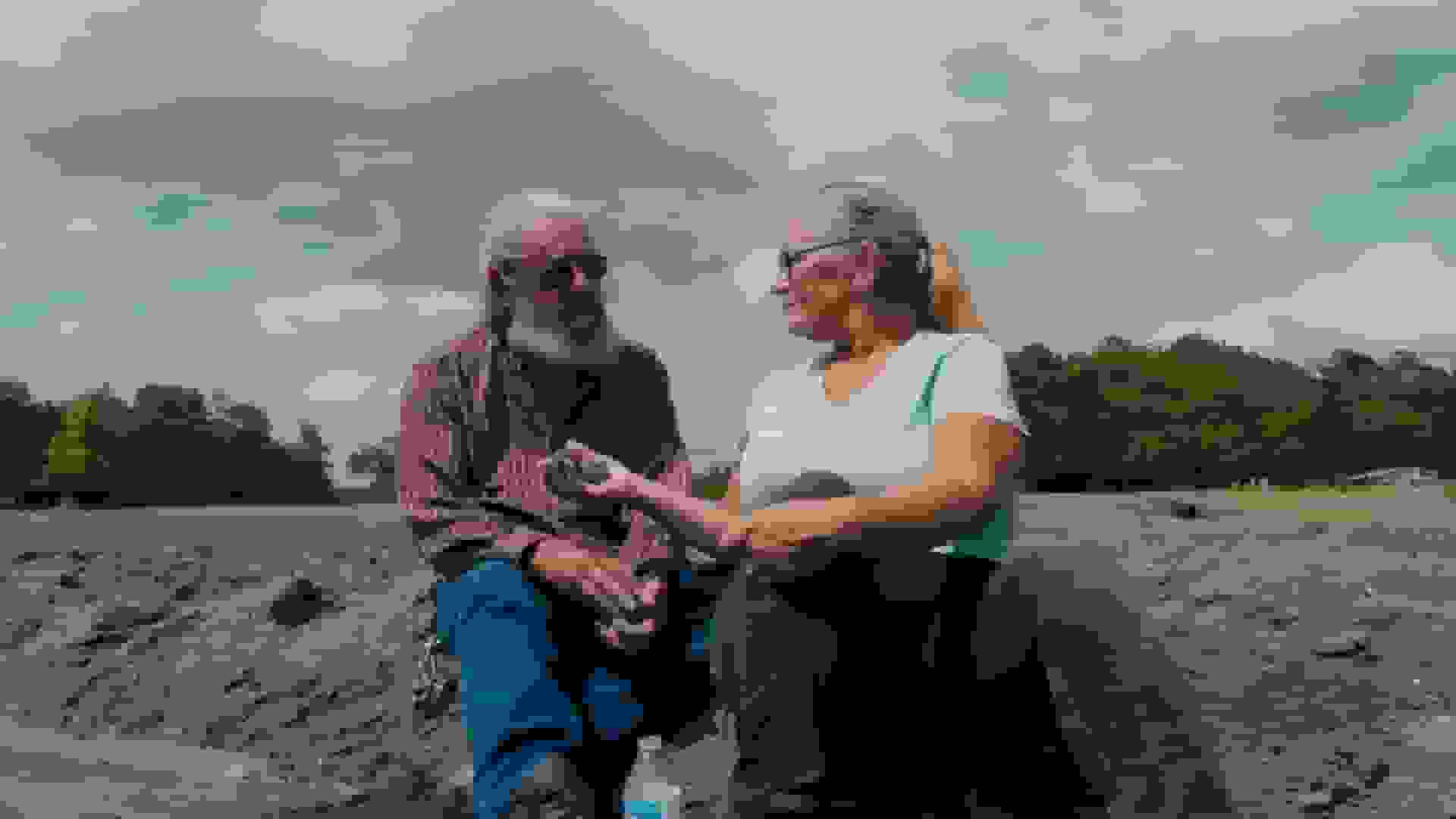
This year’s Staff Pick Award at CIFF comes by way of an ancient Arkansan volcano and the stories told by its visitors. The winner of the Vimeo Staff Pick Award at Camden International Film Festival is Caitlyn Greene’s “The Diamond,” a beautifully stylized and clever documentary short about grief, love, and diamonds of several forms.
Upon first watch, perhaps the best thing about this film lies within its living and breathing visual illusion. Supported by a barrage of gorgeous push ins and pull outs, along with the disciplined framing of each subject, an assumption of its being the start of a feature narrative doesn’t sound so far off. In this visual intentionality, Greene’s treatment seemingly gives extra value and uniqueness to place and person, albeit never truly leaving the established location.
Though, at second look — and perhaps third, fourth, fifth and forever — the true gems of this film are found in approach. Through the lens of Greene’s genius, people endlessly dig through dirt for something so extremely specific, only to slowly unearth their own traumas. Ultimately, it’s almost as if that process of searching pays off, in any case.
Who’s to say that these searchers aren’t looking for themselves? That this diamond represents more than the thousands it stands to give? It’s all a head-scratching prospect, and that’s what makes this film as stellar as the Arkansan gems that lie in wait, under that dirt, ready to be dug.
Ahead of the release, we caught up with the director to chat process, approach, inspiration, and what it took to make this film what it was.
On inspiration:
I came across an article about the Crater of Diamonds State Park in Arkansas, which I learned is the world’s only public diamond-bearing site. People from all walks of life search for diamonds atop this ancient volcanic crater, and it’s finders keepers. Some people find substantial diamonds, some don’t, and either way, it takes a lot of digging in the dirt. I was immediately hooked on the metaphor of this place.
I was interested in the hope of treasure, the grittiness of searching, and what people there were actually looking for in their lives. Creatively, I wanted to push an interview-driven piece, especially one in which subjects are given freedom to take you where they want to go, rather than guiding interviews along a plot-driven track. Errol Morris’ Vernon, Florida was a huge inspiration for this approach.
On approach:
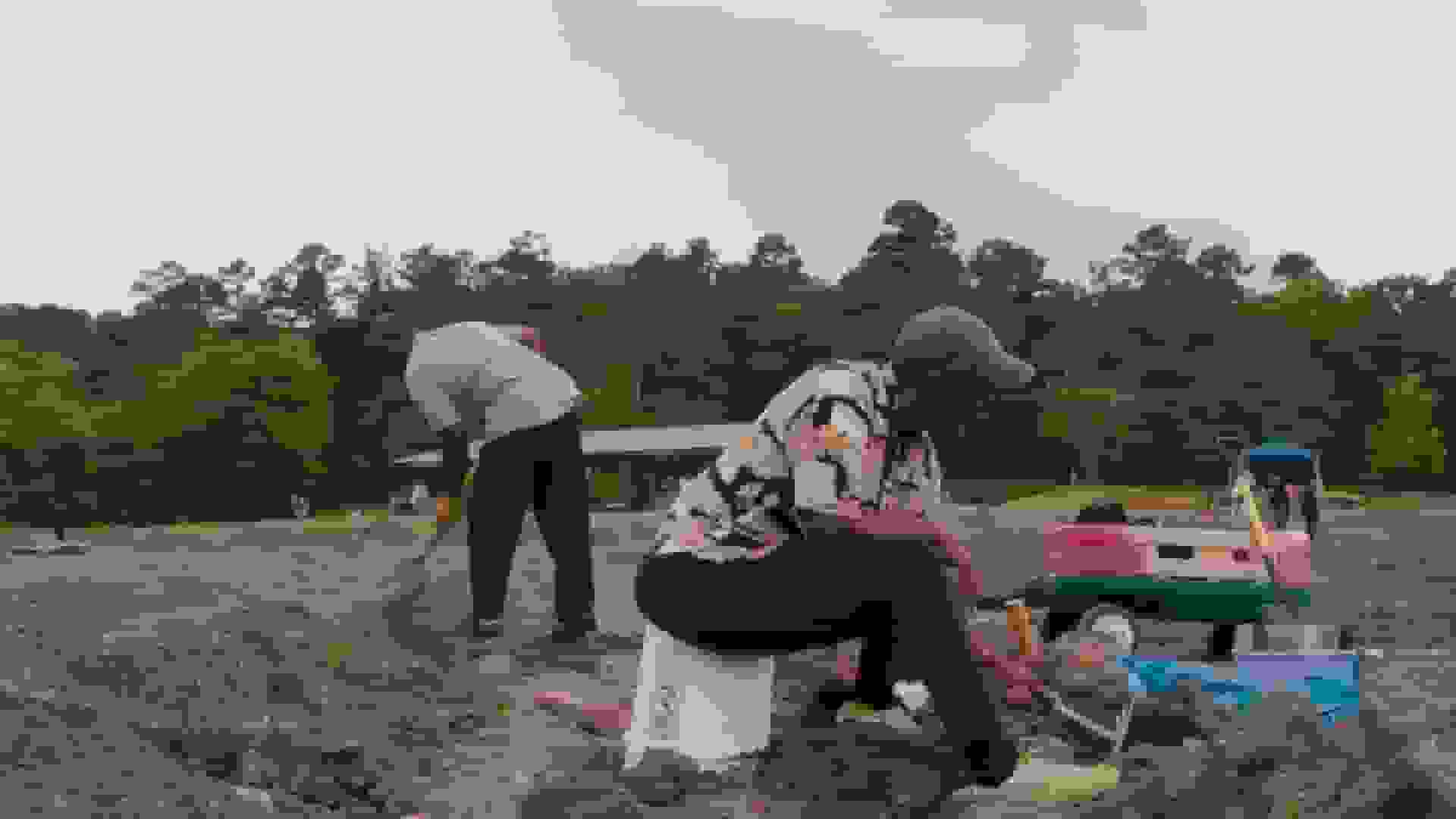
These were the cold calls of interviews – we were sitting down with total strangers and had only one window of time to record with them. My greatest aids were dirt and time. I let the conversations meander a bit and tried to create space for people to share rather than “pull” anything out of people. Having the activity of digging and looking for a diamond provided a safe topic to fall back on for people, and it gave us an excuse to sit with silence long enough for people to naturally share what was on their mind.
Not to mention, digging in the dirt is quite therapeutic. We were a two-person crew and had a minimal camera setup, which was crucial. We shot for six days total and sat with each person or couple we interviewed for the better part of two hours.
On style:
I knew I wanted the film to stay contained to the field, and for the field to feel like it exists outside of place and time. That drove a lot of our stylistic choices around lensing and camera movement, and even casting. In terms of shot choices, I knew we’d need to move between interviews that were all in a single, open space, and I wanted to create a sense of widening perspective between intimate stories. That helped inform the types of shots we needed both with interview subjects and generally in the field.
On challenges:
The edit and music were especially challenging for this film. I knew the edit would be work because of the interview approach I wanted to take, but it was really the non-traditional arc that made it challenging. We wanted to create a feeling of forward movement despite it not being traditionally plot-driven. It’s formed mostly around emotion, and editing it sometimes felt like swimming in quicksand. Anything and everything was on the table. Stepping away, getting fresh perspective, and having another editor (the talented Dillon Hayes) join me was hugely helpful.
The more surprising challenge was the music. Apart from finding the right emotion and tone, the placement and amount of music was a difficult balance to find. We wanted the score to help create cohesion but also not wear itself out as one endless cue. We wanted it to punctuate and have structure, but not segment or become predictable. It took a lot of workshopping. Big thanks to composer Jeff Melanson for his ears and heart on this one.
On advice to aspiring filmmakers:
“Start now, and keep going. Lead with action, practice ‘active rest,’ and embrace imperfection. Start now. Keep going.”
On what’s next:
“I’m working on a character-driven, vérité documentary feature in Louisiana about what happens when nature comes to claim what we thought we could control.”